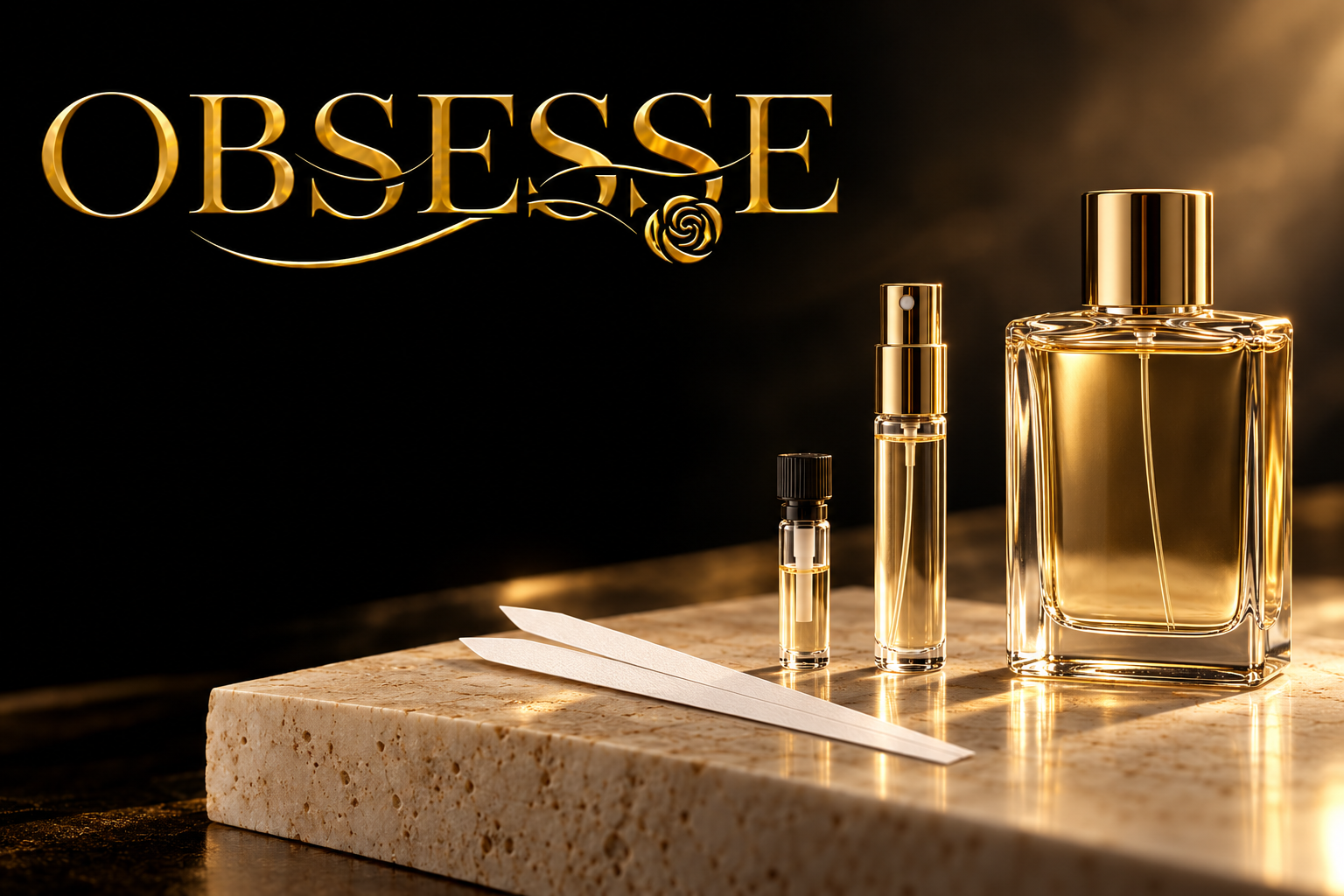
A perfume sample is usually a small brand- or retailer-provided quantity for trying a scent; a decant is fragrance transferred from a larger bottle into a smaller container; and “tester” can mean either an in-store demonstration bottle or, on some websites, a smaller try-before-buy format. Because sellers do not use these terms consistently, the listing details matter more than the label alone.
That is the clear answer to perfume tester vs sample—with decants adding a third format that shoppers often encounter online. All three can help you test before buying a full bottle, but they differ in source, packaging, size, seller responsibility and the information available to you. This guide explains what to check, especially when shopping online in India.
Quick comparison: tester, sample and decant
| Format | Common meaning | Typical purpose | Main question to verify |
|---|---|---|---|
| Sample | A small vial or spray supplied as a trial format | Short testing or comparing several scents | Who filled and labelled it? |
| Discovery set | A group of samples selected by a brand or retailer | Exploring a range or fragrance family | Which scents and sizes are included? |
| Decant | Fragrance transferred from a larger bottle to a smaller container | Multiple wears without buying the original bottle | Who transferred it, from what source, and how? |
| Retail tester | A demonstration bottle intended for store use | Trying fragrance at a counter | Is it being sold, and what packaging/cap is included? |
| Small “tester” bottle | A seller-specific try-before-buy format | Testing at home over several days | What exactly does this seller mean by “tester”? |
The word “miniature” can mean something else again: a small bottle designed to resemble the retail presentation. Do not assume a miniature is a spray, because some use splash openings. Check the mechanism as well as the volume.
What is a perfume sample?
A perfume sample is a small quantity intended to let you experience a fragrance before committing to a larger size. It may come as a spray vial, dab vial, carded vial or part of a discovery set. Samples can be complimentary, sold individually or sold as a set.
Official brand discovery sets illustrate this use clearly. Creed, for example, offers a customisable sample set that lets shoppers select several fragrances and try them before a future full-size purchase. Other brands and retailers use different quantities and packaging, so “sample” does not guarantee one standard volume.
A sample works best when your main question is: Do I like this fragrance enough to explore it further? It may provide several wears, but the exact number depends on the vial, atomiser output and your application.
Advantages of samples
- Low commitment when exploring an unfamiliar scent.
- Useful for comparing several fragrance styles.
- Often connected directly to a brand or authorised retailer.
- Easy to use during a structured skin test.
Limitations of samples
- A very small vial may not cover many different weather or occasion tests.
- Dab vials and spray bottles apply fragrance differently.
- Free samples may not include your preferred scent.
- Sample availability, packaging and purchase credit vary by seller.
What is a perfume decant?
A decant is a portion of fragrance transferred from an original larger bottle into another container. The person or business making the decant chooses the new vial, atomiser, label and filling process. This is the defining difference: the smaller container was not necessarily filled by the original fragrance brand.
Decants can be practical when you want more wear time than a tiny sample provides or want a portable amount. They can also introduce more uncertainty. You depend on the decanter for the stated fragrance identity, source bottle, cleanliness, volume, storage and packaging.
A professional-looking label is not proof of origin. Before buying, check whether the seller clearly states:
- the fragrance name and concentration;
- the stated volume;
- that the liquid was transferred from a larger bottle;
- the material and type of the new container;
- the filling or handling method, where disclosed;
- contact, replacement and leakage policies;
- how authenticity and sourcing are addressed.
If those details are vague, the lower price does not remove the uncertainty. Buy only from a source you are comfortable trusting, and keep the order record and listing screenshots.
What is a perfume tester?
“Tester” is the most confusing term because it is used in more than one way.
Meaning 1: an in-store demonstration bottle
At a perfume counter, a tester is commonly a bottle used for customer trials. It may have simpler packaging, a tester marking or presentation differences from a retail box. If such a bottle is sold online, read the listing carefully rather than assuming the cap, box, cellophane or other presentation elements will match a full retail unit.
Also avoid the common claim that tester liquid is automatically stronger, longer-lasting or higher quality than retail liquid. Packaging differences do not prove a different formula or better performance. Ask the seller what is included and judge the fragrance through real wear.
Meaning 2: a small try-before-buy bottle
Some sellers use “tester” for their own smaller trial format. In this context, it may be closer to a travel spray or extended sample than a department-store demonstration bottle. That usage is why the size, source and filling description matter.
Obsesse Fragrance currently lists a published 8 ml single tester bottle and an 8 ml five-piece tester option. Check the live product pages for current scent selection, price, stock and full purchase details rather than assuming every “tester” on the internet works the same way.
Tester vs sample: which should you choose?
Choose a small sample when you want a quick first impression or need to compare many fragrances with minimal commitment. Choose a larger, clearly described tester format when you want enough liquid to repeat the test across ordinary workdays, warm weather, indoor cooling and social settings.
For readers in India, repeated testing can be especially useful because one store visit cannot reproduce every wearing condition. A fragrance experienced briefly in an air-conditioned shop may feel different during a commute or outdoor event. The extra volume is valuable only if the product page clearly explains what you are buying.
A practical sequence is:
- Use a sample or discovery set to create a shortlist.
- Use a larger tester format for the leading candidate.
- Wear it on separate days and record the drydown.
- Buy a full bottle only when repeat enjoyment justifies it.
Our guide on how to test perfume before buying gives you a complete comparison method.
When does a decant make sense?
A decant may suit someone who already understands the format, trusts the seller and wants more than a tiny sample without buying a full bottle. It can also be useful for travel or rotation. The trade-off is that the original brand may not have filled, sealed or labelled the new container.
Choose a decant only when the seller’s sourcing and handling explanation answers your concerns. If authenticity, leakage protection or container quality is unclear, a brand sample, official discovery set or seller-defined tester with transparent details may be easier to evaluate.
Do not buy a decant solely because a social-media post calls it “original.” Look for verifiable business details, consistent policies and accurate product information.
How to evaluate the listing before you buy
1. Read the exact product title and description
Confirm whether you are buying one vial, a set, a travel spray, a demonstration tester or a decant. Look for the volume in millilitres and the number of pieces. A photograph showing several containers does not necessarily mean all are included.
2. Check who filled the container
Was it filled by the fragrance brand, an authorised retailer, the seller or an independent decanter? A transparent listing should make that distinction understandable.
3. Check the application mechanism
A spray atomiser, rollerball and dab vial do not apply the same amount or produce the same experience. If your goal is to compare projection or spray count, use a spray format consistently.
4. Review packaging expectations
Confirm whether a box, cap, label, seal or outer wrapping is included. This matters most when the listing uses “tester” for a full-size demonstration bottle. Simpler packaging can be legitimate, but it should not be a surprise.
5. Examine seller policies
Read the delivery, leakage, damage, return and replacement terms before paying. Fragrance formats are small and can be affected by loose caps or atomiser problems, so know how the seller handles an issue.
6. Save the listing and order details
Keep the invoice, confirmation email and product description. If the received item differs in size, quantity or format, your records make the comparison clearer.
How to test each format fairly
A sample, decant and tester can use different atomisers, so do not compare only by the number of sprays. One atomiser may release much more liquid than another. Apply each fragrance conservatively and judge the smell itself before judging performance.
Use this process:
- Read the label and confirm the fragrance name.
- Check for leakage, damage or an unclear container.
- Test on a blotter first if the format is unfamiliar.
- Apply to skin according to the product directions.
- Wear only one main test fragrance that day.
- Note the opening, heart and drydown.
- Repeat on another day before deciding.
If you need help choosing locations, read where to apply perfume. For application quantity, use our guide to how many sprays of perfume.
Can a sample smell different from a full bottle?
Different application mechanisms can create a different first impression. A dab vial places a small amount directly on skin, while an atomiser spreads a mist. Storage history, container condition and the time since filling can also affect the test experience.
Do not immediately conclude that the formula is different. First compare the concentration name, source, batch information where available, application amount and condition of both items. If you have serious concerns about a purchase, contact the seller rather than trying to diagnose authenticity from one smell test.
Common misconceptions
- “Tester always means full-size bottle without a box.” Not every seller uses the term that way.
- “Samples are always free.” Many samples and discovery sets are sold.
- “Decants are filled by the original brand.” A decant is generally transferred by another party unless explicitly stated otherwise.
- “Tester juice is stronger.” Packaging or a tester label does not prove superior performance.
- “Small bottles are automatically safer purchases.” Seller transparency and source still matter.
- “A splash vial and spray vial give identical tests.” The application method can change the amount and distribution.
- “One wear is enough.” A full drydown and repeat wear provide a better decision.
A buying checklist for India
Before ordering any small fragrance format, confirm:
- exact size in millilitres;
- number of pieces;
- spray, dab or roll-on mechanism;
- sample, decant, travel spray or tester definition;
- seller identity and contact details;
- source and filling disclosure;
- packaging included;
- delivery and leakage policy;
- return or replacement conditions;
- current price and availability.
This checklist is more dependable than choosing by the lowest price or most luxurious photograph.
Frequently asked questions
Is a tester the same as a sample?
Not always. A sample is usually a small trial quantity. “Tester” may describe an in-store demonstration bottle or a seller’s smaller trial format. Read the listing definition.
Is a decant an original perfume?
A decant should contain fragrance transferred from an original bottle, but the original brand usually did not fill the new container. Your confidence depends on the decanter’s sourcing and handling transparency.
Are tester perfumes stronger than retail perfumes?
Do not assume that. A tester label or simpler packaging is not evidence of a stronger formula. Compare the exact listing, concentration and real wear.
What size is best for testing perfume?
A very small sample can answer whether you enjoy the scent. A larger trial size is more useful for several complete wears across different days and settings.
Can I travel with a tester or decant?
Check the container for leakage and review the current transport operator and airport rules for liquids before travelling. Do not rely on a general blog for route-specific limits.
Should I buy a tester without a cap or box?
Only if the listing clearly discloses what is missing, the seller is trustworthy and the price reflects the presentation. For gifting, full retail packaging may be more suitable.
Which format is best for finding a signature scent?
Start with samples to shortlist, then use a larger tester or clearly sourced decant for repeat wear. Our signature scent guide explains the final comparison.
The practical answer
In the perfume tester vs sample decision, choose a sample for quick exploration and a clearly described tester for extended at-home wear. Choose a decant when you understand the transfer format and trust the source. The name on the listing is only the beginning: size, filler, atomiser, packaging, policies and repeat testing tell you what you are actually buying.