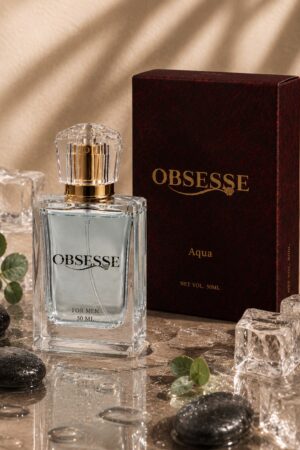

There is no universal spray count for every perfume, but one to three sprays is a sensible starting experiment for everyday wear. Begin with fewer sprays in offices, classrooms, public transport and other close spaces. Wear the fragrance for several hours, ask whether it is comfortable at conversation distance, and adjust by only one spray on the next wear.
That is the practical answer to how many sprays of perfume you should use. The final amount depends on the atomiser, formula, placement, weather, setting and how close other people will be. A “spray” is not a standard unit: one bottle may release a fine mist while another delivers a larger burst. Counting alone is useful only when you also keep the bottle and application method consistent.
Why there is no perfect number
Perfume brands often give application directions without promising a fixed spray count. For example, an official Aesop product page says to apply as desired to the wrists and neck. That wording reflects a basic reality: personal fragrance is used in different environments and with different preferences.
Five factors can make the same number feel very different:
- Atomiser output: a broad, wet spray delivers differently from a short, fine mist.
- Fragrance character: two scents with the same concentration label can have very different presence.
- Placement: two sprays close together do not behave exactly like two sprays placed on different areas.
- Environment: a crowded air-conditioned room is not the same as an outdoor evening event.
- Distance from others: close conversation makes personal scent more noticeable.
This is why “always use exactly four sprays” is not reliable advice. Treat the first wear as calibration, not a final verdict.
A practical starting framework
The ranges below are not rules or safety limits. They are conservative starting points for observing a perfume in common situations. Always follow the product label and reduce the amount if the scent feels uncomfortable to you or people nearby.
| Situation | Starting experiment | What to observe |
|---|---|---|
| First skin test | 1 spray | Opening, drydown and skin comfort |
| Office, classroom or clinic | 1–2 sprays | Comfort at conversation distance |
| Everyday errands or casual outing | 2–3 sprays | Whether it remains noticeable without dominating |
| Outdoor social event | 2–4 sprays | Movement, distance and changing weather |
| Reapplication later | Add 1 spray first | Whether others could still detect the original application |
If one spray from your bottle is already strong, stop there. If three fine sprays become difficult to notice after a complete wear test, increase gradually on a different day. Changing the count in small steps produces a clearer answer than doubling it immediately.
1. Start with one spray when testing a new perfume
A new fragrance deserves a controlled first wear. Apply one spray to clean skin, let it dry, and follow it from opening to drydown. This allows you to learn the scent without confusing performance with quantity.
Notice three things:
- Does the opening feel comfortable after the first few minutes?
- How does the main character change over the next hour?
- Can you still detect it later when you move or bring the application point closer?
Do not use the first ten minutes to decide the everyday count. Top notes can make the opening seem especially bright or vivid, while the later stages may sit closer to the skin. Our guide to perfume notes explains how the opening, heart and base relate to the wearing experience.
2. Calibrate your atomiser
Before comparing advice online, look at your own bottle. Press the atomiser once with a normal, complete motion. A hesitant half-press may release droplets rather than the usual mist, while repeated rapid presses may create overlapping wet spots.
For testing, use the same full press each time. Do not compare “three sprays” from a travel atomiser with “three sprays” from a full-size bottle and assume they represent the same amount. Even two full-size atomisers can differ.
If a nozzle sputters or leaks, clean the exterior according to the packaging instructions and avoid spraying toward your face. A faulty spray mechanism makes count-based comparisons unreliable.
3. Match the amount to the setting
The best spray count is partly a question of courtesy. In a private outdoor setting, people can move away or choose their distance. In a lift, cab, classroom, salon, clinic or meeting room, they cannot do that easily.
For close shared spaces, begin at the lower end. One spray on the torso under clothing or one application point away from the face can create a personal effect. For an outdoor gathering, you may test one additional spray on a separate day.
The International Fragrance Association notes that a small percentage of people are sensitive to strong scents. That does not mean every fragrance is unsuitable; it is a reason to keep intensity appropriate to the setting. For workplace-specific examples, see our office perfume etiquette guide for India.
4. Consider placement before adding more
Two sprays on different locations can feel more evenly distributed than several sprays concentrated beside the nose. Wrists, the sides or base of the neck, and inner elbows are common starting points. The chest or torso can keep the scent closer to the wearer.
If you cannot smell a neck application after a while, do not assume it has disappeared. Try one wrist or inner-elbow spray on the next wear so you can check it during the day. Our complete guide to where to apply perfume compares skin, clothing and common application areas.
Do not spray every possible pulse point simply to reach an internet-recommended total. Choose one or two locations, test, and add another location only when it serves a clear purpose.
5. Do not treat concentration as an automatic spray calculator
Eau de Toilette, Eau de Parfum and Parfum are useful concentration categories, but they do not predict an exact spray count. Formula, atomiser, placement and perception still matter. One Eau de Parfum may feel airy while another feels dense; an Eau de Toilette may project clearly in its opening.
Begin conservatively with any unfamiliar bottle, regardless of the label. Then use real wear to decide. Our EDP vs EDT vs Parfum guide explains why the concentration name is only one part of performance.
6. Account for Indian weather without oversimplifying it
India does not have one uniform climate. A hot, dry afternoon in Delhi, humid weather in Mumbai, a monsoon commute in Kolkata and an air-conditioned Bengaluru office create different wearing conditions. Clothing, travel and time outdoors matter as much as the city name.
Use the lower end of your range on a hot day or before entering crowded transport, then observe the scent after you reach your destination. Avoid automatically adding several sprays because you expect outdoor heat to “erase” the fragrance. You may become less aware of it while people nearby can still notice it.
For seasonal comparisons, keep one variable stable. Use the same bottle, same locations and same initial count, then note how the experience changes. This produces information you can use instead of a vague memory.
7. Understand nose fatigue before reapplying
Continuous exposure can reduce your awareness of an odour. Research reviews on olfactory habituation and adaptation describe how perceived intensity can decrease relatively quickly during ongoing exposure. In everyday language, your nose may pay less attention to a familiar scent even though it remains present.
Before reapplying:
- Move to fresh air for a few minutes if practical.
- Smell the application point at a normal distance, not with your nose pressed against it.
- Ask a trusted person whether they can detect the fragrance at conversation distance.
- If reapplication is needed, add one spray and reassess.
This is especially important at work. Repeatedly topping up because you personally stopped noticing the scent can make the fragrance much stronger for everyone else.
8. Separate longevity, projection and spray count
Adding sprays often increases the initial intensity, but it does not guarantee proportionally longer wear. A fragrance can last close to the skin after its projection has softened. You may need to check the application point rather than expecting it to fill the room all day.
Longevity is how long the scent remains detectable. Projection is how far it seems to radiate at a particular time. Sillage is the trail noticed as you move. Learn the difference in our guide to perfume projection, sillage and longevity.
Decide which result you want. If the perfume already lasts but sits close, adding many sprays to chase projection may make the opening uncomfortable without changing the later character in the way you expect.
A simple two-day spray-count test
Use this method when you want a repeatable answer for a specific perfume:
Day one: establish the baseline
- Apply one or two full sprays to the same planned locations.
- Write down the time and setting.
- Check at approximately one hour, four hours and near the end of your wear.
- Record comfort, projection and whether anyone nearby commented without prompting.
Day two: change only one variable
- Use the same locations and a similar routine.
- Add or remove only one spray.
- Compare the same checkpoints.
- Choose the lower count if both results are equally satisfying.
Testing on separate days avoids mixing two different doses on your skin. If you are still evaluating the perfume itself, follow our full guide on how to test perfume before buying.
Common spray-count mistakes
- Copying an influencer’s number: their bottle, atomiser, climate and setting may differ.
- Counting half-presses inconsistently: use the same complete atomiser action during tests.
- Reapplying as soon as you stop noticing it: first account for olfactory adaptation.
- Testing multiple doses on the same day: yesterday’s notes are easier to compare than overlapping applications.
- Ignoring shared spaces: your preference is not the only factor in a lift, cab or office.
- Assuming more sprays guarantee longevity: performance has several dimensions.
- Changing placement and count together: you will not know which change produced the result.
Try before choosing your everyday amount
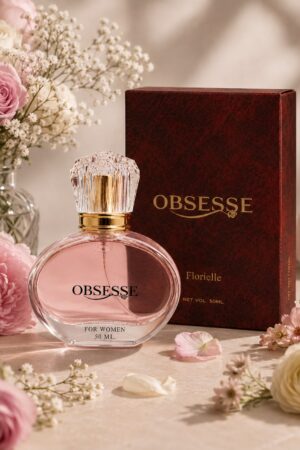
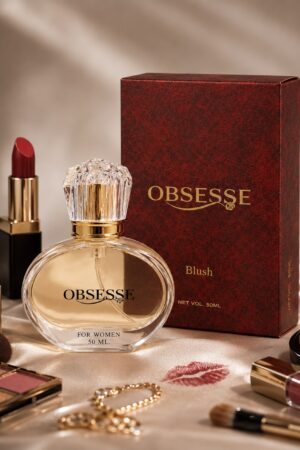
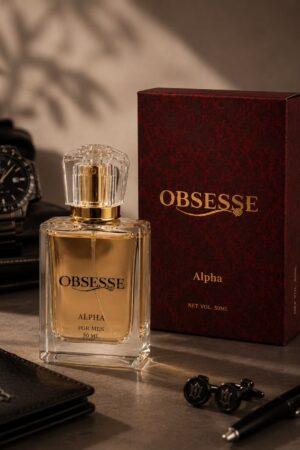
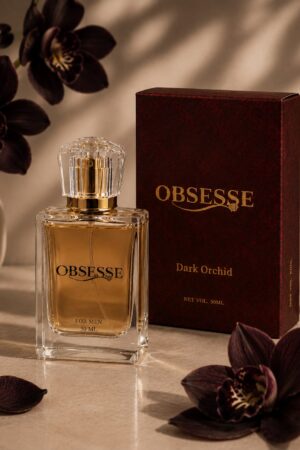
A tester lets you repeat the experiment without committing to a full bottle immediately. Obsesse Fragrance currently lists an 8 ml single tester bottle and an 8 ml five-piece tester option. Check the live product pages for current selection, price and availability.
Use the tester through ordinary days rather than saving every wear for special events. Your everyday environment will give you the most useful spray-count answer.
Frequently asked questions
Is two sprays of perfume enough?
It can be. Two sprays are a useful everyday starting point for many testing situations, but atomiser output, formula, placement and setting determine the actual effect.
Is five sprays too much?
Not universally, but it may be excessive in a small shared space or with a strong atomiser. Test a lower number first and increase gradually only if needed.
How many sprays should I use for the office?
Begin with one or two discreetly placed sprays. Check the scent at conversation distance and avoid repeated top-ups in a shared room.
Should I spray more Eau de Toilette than Eau de Parfum?
Do not decide from the label alone. Test the exact fragrance and atomiser; concentration category does not provide a universal spray formula.
How many sprays should I use in hot weather?
Start at the lower end of your tested range, especially before public transport or close indoor contact. Evaluate the result after moving between outdoor heat and air conditioning.
When should I reapply perfume?
Reapply only after checking that the scent has genuinely faded for others as well as for you. Add one spray first rather than repeating the entire morning dose.
Can I spray perfume on clothes to use fewer sprays?
Clothing can present perfume differently, but it is not suitable for every fabric. Follow the product directions and test a hidden area for marks or colour change.
The practical answer
If you are wondering how many sprays of perfume to use, start with one to three for everyday testing, choose a lower amount in close shared spaces, and adjust by one spray at a time. Keep the bottle, atomiser action and placement consistent. The right count is the smallest repeatable amount that gives you an enjoyable scent without making the surrounding space uncomfortable.