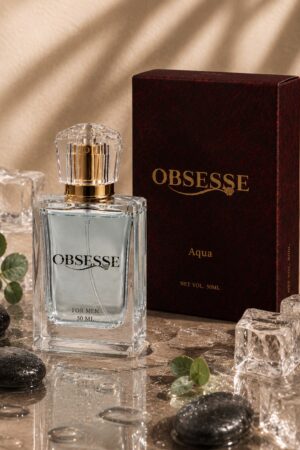

If you can smell your perfume when you first apply it but notice it less later, the most likely explanation is olfactory adaptation. Your fragrance may still be present; your smell system has simply become less responsive to a familiar, continuous odour.
This temporary effect is sometimes called “nose blindness,” although that informal phrase should not be confused with a medical loss of smell. The safest response is not to add several sprays immediately. Step into unscented air, ask a trusted person at an appropriate distance, and assess the fragrance again later.
Quick answer: When asking “why can’t I smell my perfume?”, check whether you can still smell other familiar odours. If only your perfume seems to disappear after continuous wear, adaptation is a likely explanation. If many smells are reduced, absent or distorted—especially after illness, injury or a sudden change—seek appropriate medical advice rather than treating it as a perfume problem.
What is olfactory adaptation?
Olfactory adaptation is a temporary reduction in sensitivity during prolonged or repeated exposure to an odour. Research describes it as a stimulus-specific effect: responsiveness to the continuing smell decreases, then recovers after time without that exposure.
In everyday terms, your brain and smell system stop giving the same familiar signal full attention. This is useful because it lets new environmental information stand out. It also explains why you may stop noticing your perfume while another person detects it when you enter a room.
Adaptation does not prove that a perfume is long-lasting, nor does it prove that it has vanished. It only means your own moment-to-moment perception is not a reliable performance meter after continuous exposure.
Adaptation, evaporation and weak performance are different
| Possibility | What is happening | Simple check |
|---|---|---|
| Olfactory adaptation | Your sensitivity to the familiar scent temporarily falls | Other people may still notice it; sensitivity can return after a break |
| Normal dry-down | Bright top notes fade and quieter heart or base notes remain | Smell close to the application area later |
| Low projection | The scent stays near the skin | Detectable close up but not at a distance |
| Short wear | Little detectable fragrance remains | Neither you nor a neutral observer can detect it later |
| Broader smell change | Multiple odours seem weak, absent or distorted | Food, soap, coffee and other familiar smells are also affected |
For a clearer explanation of performance terms, read Perfume Projection vs Sillage vs Longevity.
Why you may stop noticing perfume quickly
The perfume is close to your nose
Fragrance applied heavily to the front of the neck or upper chest creates repeated exposure near the nose. You may adapt sooner than if the scent reaches you in occasional movement.
You use the same fragrance every day
Daily familiarity can make a scent feel less remarkable even when the formula and application are unchanged. This does not necessarily mean the bottle has weakened.
You sprayed more to compensate
Extra sprays can create stronger continuous exposure, which may make self-assessment harder. The result can be a fragrance that feels absent to you but excessive to people nearby.
The fragrance has entered its dry-down
Many perfumes begin with volatile materials that create a bright opening. As those disperse, the composition may sit closer to the skin or reveal softer notes. Our guide to top, heart and base notes explains this development.
Weather and setting changed
Heat, humidity, airflow and air conditioning affect how scent diffuses and how you experience it. A perfume may feel expansive during an outdoor commute and quieter at a cool desk. See our guide to perfume for hot weather in India.
Your application was removed
Handwashing, bathing, perspiration, rubbing from sleeves or wiping the skin can reduce fragrance at the application site. A faint result is not always adaptation.
How to check whether other people can still smell it
A controlled check is better than asking someone immediately after spraying.
- Apply your usual conservative amount at a known time.
- Do not add more perfume for several hours.
- Ask one trusted person in a normal shared setting—not nose-to-skin—whether they notice it.
- Ask for a neutral answer such as “not noticeable,” “close and subtle,” or “strong.”
- Repeat on another day before changing your routine.
A single opinion is not a scientific measurement. However, repeated feedback under similar conditions is more useful than relying only on a nose continuously exposed to the perfume.
What to do when you become nose-blind to perfume
Take an unscented break
Move into fresh, neutral air and stop deliberately sniffing the application area. Recovery varies with exposure and the odour, so there is no universal reset time.
Do not use coffee beans as a magic reset
Coffee is another strong smell, not a guaranteed reset button. Neutral air and a genuine break reduce the number of competing odours and are easier to standardise.
Use fewer test fragrances
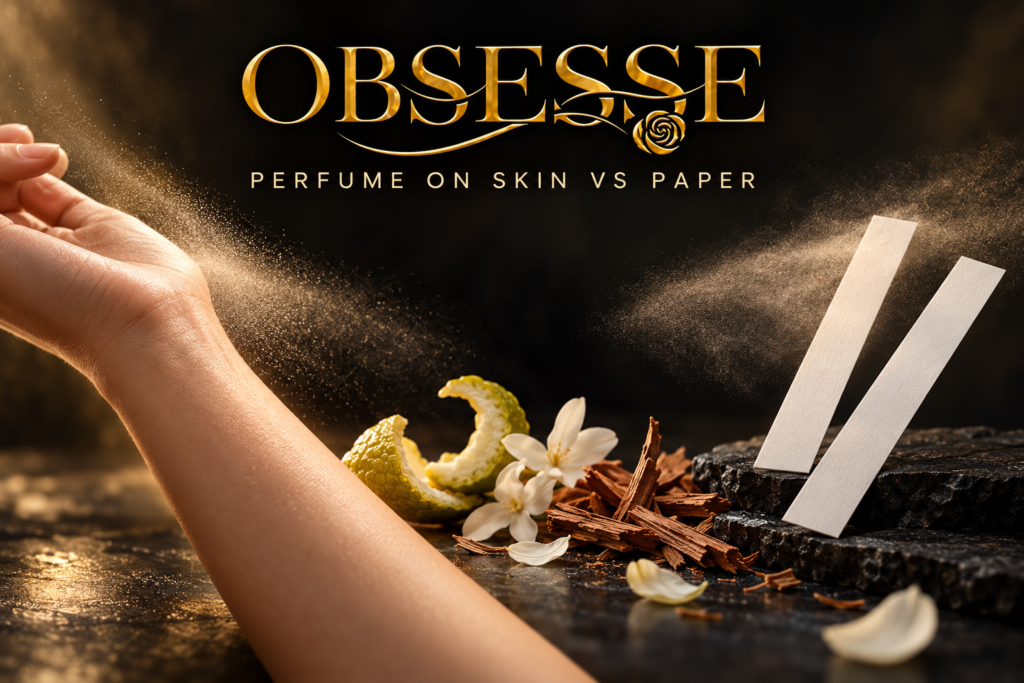
When choosing perfume, compare a small number on paper, then test one or two on skin. Our perfume testing guide gives a structured method, while Perfume on Skin vs Paper explains what each surface reveals.
Keep application away from constant close exposure
You do not need to avoid the neck completely, but consider whether every spray sits directly below your nose. Wrists or other appropriate points may give more occasional movement. Follow fabric cautions and avoid irritated skin. For placement options, see Where to Apply Perfume.
Record the amount instead of guessing
Note the fragrance, atomizer, number of sprays, application points, time and setting. A record prevents gradual overapplication caused by “I cannot smell it, so I need more.”
Rotate only if you enjoy variety
Using another fragrance occasionally can make the original feel more noticeable when you return, but rotation is not required. Do not buy extra bottles solely to solve a perception issue.
How to reapply without overdoing it
Before reapplying, answer three questions:
- Can someone else still detect the perfume at a normal distance?
- Is the remaining scent present close to the application point?
- Am I moving into a close shared space such as an office, cab, classroom or restaurant?
If the fragrance remains noticeable to others, do not add more simply because you have adapted. If it has genuinely faded and reapplication suits the setting, use a small amount rather than repeating the entire morning application.
Our guide to how many sprays of perfume to use provides a flexible framework. For workplaces, also review office perfume etiquette in India.
When it may not be normal adaptation
Adaptation is usually specific to an odour you have been experiencing continuously. A broader or persistent change deserves different attention.
The U.S. National Institute on Deafness and Other Communication Disorders distinguishes reduced smell, complete loss of smell and distorted smell perception. Such changes can have causes including respiratory illness, sinus problems, smoking, head injury, certain medications and other conditions.
Consider professional medical advice if:
- many familiar smells have suddenly weakened or disappeared;
- odours smell persistently distorted or unpleasant;
- the change followed a head injury or significant chemical exposure;
- you have ongoing nasal or sinus symptoms;
- the problem persists or concerns you.
This article is fragrance guidance, not a diagnosis. Do not try to fix a general smell change by spraying more perfume.
A practical seven-day test
If the issue appears limited to one perfume, use this simple log:
- Choose one normal application amount and keep it consistent.
- Record when you first stop noticing the scent.
- Check the application area without repeatedly sniffing it.
- Get one neutral feedback point later in the day.
- Note weather, commute and time spent in air conditioning.
- Repeat on two or three non-consecutive days.
- Decide whether the issue is adaptation, close projection or genuinely short wear.
This method is more informative than increasing the spray count every morning.
Testing before buying a larger bottle
A trial size helps you learn whether you adapt quickly to a specific scent and whether other people still detect it. Obsesse Fragrance currently lists an 8 ml single tester bottle and an 8 ml five-piece tester option. Check the current listing details and test candidates on separate days.
Frequently asked questions
Why can’t I smell my perfume after ten minutes?
Close, continuous exposure can lead to rapid adaptation, but application amount, placement and a fast-changing opening may also contribute. Check later and seek neutral feedback before adding more.
Can other people smell perfume when I cannot?
Yes. Adaptation is based on your exposure, so a newly arriving person may notice the fragrance more clearly.
Does nose blindness mean the perfume is too strong?
Not necessarily. It means your sensitivity to that continuing odour has decreased. However, heavy application can increase continuous exposure and make overapplication more likely.
How long does olfactory adaptation last?
There is no single time. Recovery depends on the odour, concentration, exposure duration and the individual. Time away from the scent generally helps sensitivity recover.
Should I spray more when I stop smelling perfume?
Not automatically. First check whether it remains detectable to someone else and whether the setting can comfortably accept more fragrance.
What if I cannot smell food, soap or other familiar odours?
That is broader than perfume adaptation. Consult an appropriate healthcare professional, particularly if the change is sudden, persistent or accompanied by other symptoms.
Final takeaway
Not noticing your perfume does not automatically mean it has disappeared. Continuous exposure can temporarily reduce your sensitivity while the scent remains present to others. Use breaks, consistent testing and neutral feedback before reapplying. If the change affects many smells rather than one perfume, treat it as a health question—not a reason to spray more.