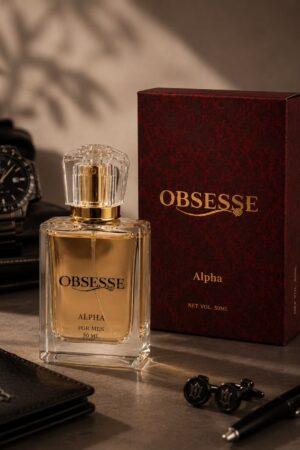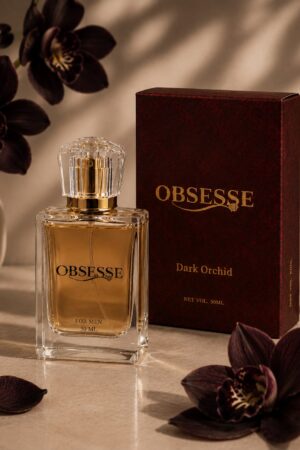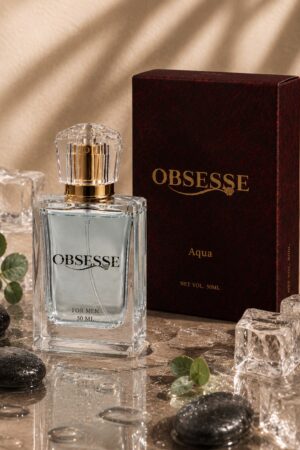

The best perfume for hot weather is not automatically the lightest or the weakest. It is a fragrance whose scent profile, application and dry-down remain comfortable when heat, humidity, travel and shared spaces make aromas feel more noticeable.
For many Indian routines, a practical starting point is a fresh, green, citrus, aromatic or airy woody profile applied with restraint. But this is a shortlist, not a rule. A soft floral or controlled warm scent can also work well if you test it in the weather and setting where you will actually wear it.
Quick answer: Choose perfume for hot weather by looking for a scent profile you enjoy, testing it on skin during a normal warm day, waiting for the full dry-down, and starting with fewer sprays. Judge comfort, projection and usefulness—not only how fresh the first minute smells.
Why perfume can feel different in hot weather
Fragrance is made from volatile materials: they enter the air and reach the nose. Body heat can help diffuse a scent, and environmental temperature is one of several factors that affect how a fragrance interacts with skin. That is why a perfume may seem quiet in a cool shop but more expansive during a sunny commute.
Heat is not the only variable. Humidity, airflow, clothing, skin condition, the amount applied and time spent in air conditioning all shape the wearing experience. Even two hot days can produce different results if one is dry and the other humid.
The sensible response is not to chase a universal performance promise. Test the perfume in realistic conditions. Our guide to projection, sillage and longevity explains the three measures separately.
Which fragrance profiles often suit warm conditions?
The following families can be useful places to begin. They are not guarantees, and a perfume’s complete formula matters more than a single listed note.
| Scent direction | Typical impression | What to check |
|---|---|---|
| Citrus | Bright, sparkling, zesty | Whether the dry-down has enough balance after the opening fades |
| Green | Leafy, crisp, herbal | Whether it feels refreshing rather than sharp |
| Aromatic | Herbal, clean, sometimes cooling | Whether herbs remain smooth on your skin |
| Fresh floral | Airy petals, clean bloom, soft radiance | Whether sweetness stays comfortable in humidity |
| Light woody | Dry, polished, grounded | Whether woods stay clear rather than heavy |
| Watery or mineral | Transparent, breezy, abstract freshness | Whether the effect feels natural to you through the dry-down |
For a clearer map of these styles, read Fragrance Families Explained. If a description lists unfamiliar top, heart and base notes, our perfume notes guide will help you interpret it.
Do you have to avoid sweet, spicy or woody perfumes?
No. Hot weather does not ban vanilla, amber-style accords, spices, woods or richer flowers. It changes how carefully you should assess them.
A warm composition can still be enjoyable on a summer evening when it has contrast—perhaps citrus around spice, a dry wood beneath sweetness, or a transparent floral heart. The same scent may feel too dense at midday in a crowded vehicle but balanced after sunset outdoors.
Instead of ruling out entire families, ask three questions:
- Does the fragrance become sweeter or louder as the day warms?
- Is it comfortable at close range in a cab, lift, classroom or office?
- Can a smaller application preserve the character without overwhelming the setting?
How to choose perfume for hot weather step by step
1. Define the real use case
“Summer perfume” is still too broad. Write down where and when you need it: outdoor errands, a daily metro commute, an air-conditioned office, college, evening events or a humid coastal holiday.
A close indoor environment usually calls for more control than an open terrace. If work is the priority, combine this guide with our advice on office perfume etiquette in India.
2. Shortlist by feeling and family
Choose two or three words for the effect you want: crisp, calm, polished, green, clean, dry, lively or soft. Then connect those words with likely families. “Crisp and green” could lead towards citrus, herbs, tea or leafy notes. “Dry and polished” could suggest vetiver, cedar or an aromatic-woody composition.
This method is more reliable than buying because one attractive ingredient appears in the description. A note list is useful, but the balance of the full composition determines the result.
3. Compare on paper first
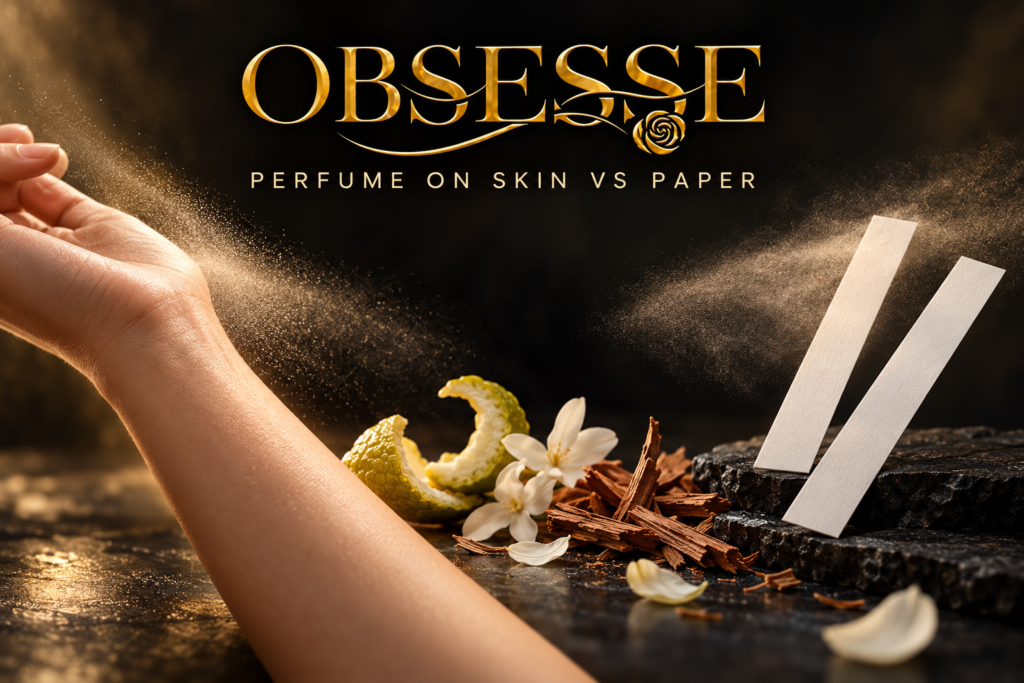
Use blotters to remove obvious mismatches. Label each strip and give the opening time to settle. Do not place many scented strips in the same pocket or bag, because their aromas can mingle and make comparison harder.
4. Test serious candidates on skin
Paper cannot show the complete wearing experience. Apply one or two candidates to separate areas and avoid rubbing. Smell the opening, revisit the heart and judge the later dry-down.
Try to include a normal warm period in the test. Walking from home to transport, spending time in an air-conditioned room and stepping outdoors again may tell you more than repeated smelling inside a shop. See How to Test Perfume Before Buying for a complete comparison method.
5. Start with a conservative spray count
There is no correct number for every perfume. Atomizers release different amounts, formulas project differently and settings vary. Begin with less than you think you may need, assess it for a full wear, then change only one variable on the next test.
Our guide to how many sprays of perfume to use provides a flexible framework for offices, daily wear and events.
6. Score comfort as well as performance
After the test, give each candidate a simple score from one to five for:
- Opening: Is the first impression pleasant rather than harsh?
- Dry-down: Do you still enjoy it after the bright notes settle?
- Comfort: Does it remain easy to wear in heat and humidity?
- Control: Can you adjust application for close indoor spaces?
- Usefulness: Does it fit your real schedule?
A fragrance that lasts a long time but feels tiring is not necessarily the better choice. For daily hot-weather wear, comfort and control often matter more than maximum intensity.
Four practical hot-weather scent directions
These examples describe general styles, not specific Obsesse Fragrance products.
Citrus, basil and dry woods
A citrus opening can feel energetic, basil or another herb can add green character, and a dry woody base can provide structure. Check whether the fragrance remains interesting after the citrus opening becomes quieter.
Tea, green leaves and vetiver
This direction can feel calm, dry and clean without suggesting soap. Tea notes vary from delicate and airy to smoky; vetiver may smell earthy, grassy, dry or woody depending on the composition.
Transparent flowers and soft musk-like notes
An airy floral profile can work well when the sweetness is controlled and the base stays smooth. Test in humidity, because a floral you find soft indoors may feel more noticeable outdoors.
Marine, mineral and light woods
Watery or mineral effects can create an impression of breeze or open air. They are abstract accords rather than a promise that the perfume will literally smell like clean water. Wear-test the dry-down; some people enjoy these profiles while others prefer citrus or green freshness.
Application tips for Indian heat and humidity
- Apply to clean, dry skin: This gives you a clearer test of the perfume itself.
- Use fewer sprays first: Adding later is easier than removing an overpowering application.
- Do not rub wrists together: Let the application settle naturally.
- Consider placement: Wrists and neck are common, but exposed areas may be affected by frequent washing or sun. Choose comfortable sites and avoid irritated skin.
- Be careful with clothing: Some fragrance materials can mark delicate fabrics. Test an inconspicuous area and do not spray jewellery.
- Reassess before reapplying: Olfactory adaptation can make you notice your own scent less even when others still can.
For a fuller comparison of skin and clothing placement, see Where to Apply Perfume.
Common mistakes to avoid
- Buying from the opening alone: Bright top notes may fade into a much warmer base.
- Assuming EDT is always better for heat: Concentration labels are helpful, but formula, dose and application also matter. Review EDP vs EDT vs Parfum.
- Overapplying to force longevity: More sprays can increase intensity without improving the scent’s balance.
- Testing only in air conditioning: Include the outdoor conditions you expect to face.
- Ignoring storage: Do not leave a bottle in direct sun, a hot car or a repeatedly heated bathroom. Follow our perfume storage guide for India.
- Calling one family universally “best”: Personal preference and context remain essential.
A simple buying checklist
Before purchasing, confirm that you have smelled the dry-down, tested the scent during relevant weather, found a comfortable application amount and identified at least one real setting where you will wear it.
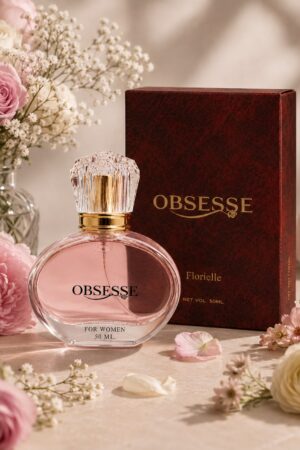
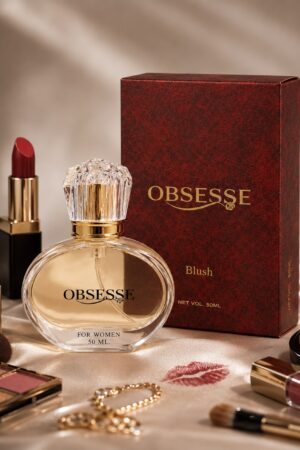
If you want more than a quick store impression, Obsesse Fragrance lists an 8 ml single tester bottle and an 8 ml five-piece tester option. Check the current product-page details, then compare candidates on separate days with the same method.
Frequently asked questions
What type of perfume is best for hot weather?
Fresh citrus, green, aromatic, airy floral and light woody profiles are useful starting points, but no family is automatically best. Test the complete dry-down in your climate and routine.
Does perfume smell stronger in heat?
Body heat can aid diffusion, and temperature is one factor that affects how fragrance behaves. The perceived result also depends on dose, formula, humidity, airflow, skin and setting.
Is EDT always better than EDP in summer?
No. EDT and EDP are concentration terms, not reliable predictions of freshness or comfort. A carefully applied EDP may suit you better than an EDT whose composition feels sharp or loud.
How many sprays should I use in hot weather?
Start conservatively and judge one full wear. The appropriate amount varies with the atomizer, fragrance, setting and your preferred presence.
Can I wear a sweet perfume in summer?
Yes, if the dry-down remains comfortable. Try a smaller application, test it at the intended time of day and notice whether heat makes the sweetness feel denser.
Should I keep perfume in the refrigerator during summer?
Usually a stable, cool, dark cupboard is more practical. Avoid direct sunlight, strong heat and repeated temperature changes, and follow any storage directions supplied with the product.
Final takeaway
The right perfume for hot weather is the one you enjoy after the opening, can control in shared spaces and have tested during a realistic Indian day. Begin with suitable scent directions, but let skin testing, dry-down comfort and your routine make the decision. That approach is more dependable than any fixed list of “summer notes.”