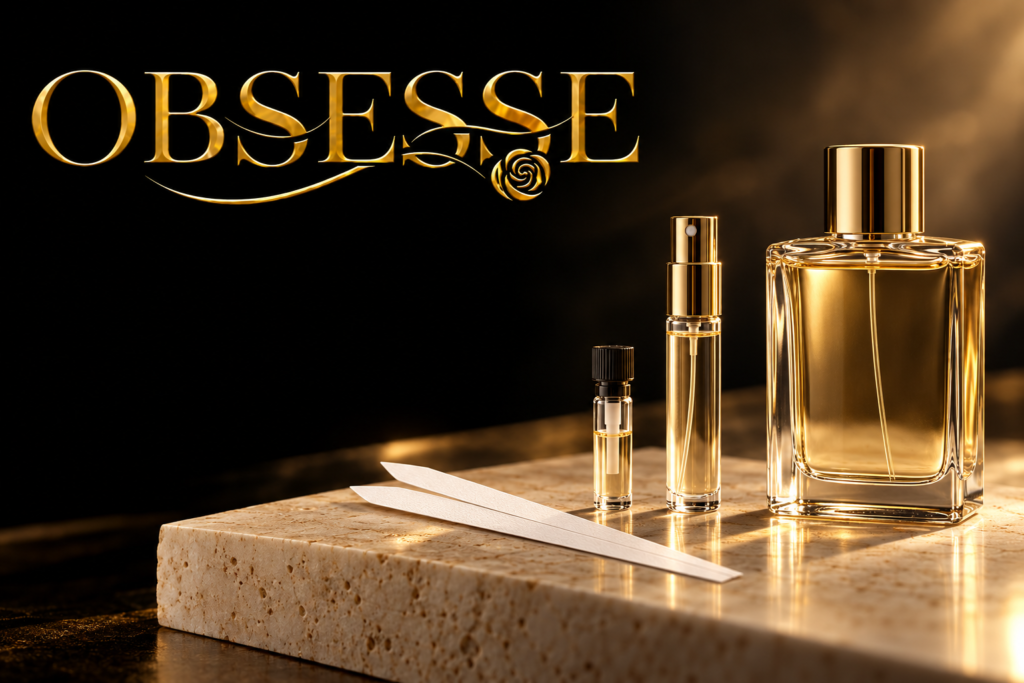
Perfume can smell different on skin than on a paper blotter because the two surfaces do not hold and release fragrance materials in the same way. Paper is useful for comparing several openings quickly. Skin is a living, warm surface with its own hydration, texture and temperature, so it gives a better preview of how the fragrance may develop when you actually wear it.
The practical answer is to use both. Start on paper to build a shortlist, then test the serious candidates on clean skin and follow the dry-down for several hours. A blotter helps you compare; skin helps you decide.
Quick answer: For perfume on skin vs paper, use blotters for fast, controlled comparison and skin for the final buying decision. Keep the number of candidates small, label every strip, avoid rubbing the application, and judge the opening, heart and dry-down in your normal weather and routine.
What a paper blotter tells you
A perfume blotter—also called a scent strip—is a neutral, convenient surface designed for smelling fragrance without applying every option to your body. It is especially useful in a shop where you may want to compare several perfumes.
On a blotter you can assess:
- the first impression and broad scent direction;
- whether a perfume seems citrus, floral, woody, green, spicy or sweet;
- obvious likes and dislikes;
- how two or three candidates differ when tested at the same time;
- whether a fragrance deserves a more complete skin test.
Paper does not reproduce the exact wearing conditions of skin. It has no skin temperature, hydration or surface lipids, and it will not experience your commute, clothing, perspiration or air-conditioned office. Treat it as a screening tool, not a final verdict.
What a skin test tells you
Skin testing shows how the perfume releases into the air from a living surface. Recent analytical research comparing skin with inert surfaces and test strips found that fragrance materials can show different evaporation behaviour depending on the surface and the individual molecule. Another study linked variation in release from skin with properties including hydration, water loss and surface texture, while also stressing that molecule chemistry matters.
This does not mean your skin completely rewrites a perfume. The formula remains the formula. What can change is the balance you perceive as different materials evaporate and remain at different rates.
A skin test is useful for assessing:
- whether the opening feels smooth or sharp at close range;
- how the heart develops after the most volatile materials disperse;
- whether the base becomes dry, sweet, powdery, woody or warm;
- how noticeable the perfume feels during movement and changing temperature;
- whether you remain comfortable with it after several hours.
Perfume on skin vs paper: the practical differences
| Question | Paper blotter | Skin |
|---|---|---|
| Best use | Quick comparison and shortlist | Final wear test |
| Surface | Relatively consistent paper | Warm, hydrated, textured living surface |
| Convenience | Easy to label and carry | Limited testing space |
| Real-life relevance | Partial | Higher for personal wear |
| Opening comparison | Very useful | Useful, but only one part of the test |
| Dry-down decision | Helpful reference | Usually more important |
| Risk of mixing scents | Strips can touch in a pocket | Nearby applications can overlap |
Why the same perfume may vary between people
People often explain every difference as “body chemistry,” but that phrase is too broad to be useful on its own. Several practical factors can affect how a perfume is released and perceived.
Skin hydration
Research suggests hydration can influence the retention and evaporation of some fragrance materials. This is one reason blanket claims such as “perfume never lasts on dry skin” are too simple. Molecules behave differently, and a complete perfume contains many materials.
Skin temperature
Warmth can aid diffusion, so a scent may seem more noticeable after walking outdoors than it did in an air-conditioned shop. For Indian conditions, include a normal warm part of the day in your wear test rather than testing only indoors.
Surface texture and water loss
Skin is not smooth glass. Its micro-texture and water movement can affect how particular materials are retained or released. The available research is developing, so these factors should guide realistic testing rather than become rigid rules.
Application amount
Two people may think they are comparing the same fragrance while using different numbers of sprays or atomizers that release different volumes. Control the dose before attributing every difference to skin.
Environment and attention
Humidity, airflow, clothing, room size and nearby smells all influence the experience. Repeated exposure can also make you notice your own fragrance less even while it remains detectable to someone else.
How to test perfume on paper correctly
1. Label before spraying
Write the fragrance name and time on each strip. Once several blotters are in your hand, memory becomes unreliable.
2. Use one application per strip
Spray from a consistent distance and avoid soaking the paper. The goal is comparison, not maximum intensity.
3. Let the alcohol flash off
Wait briefly before placing the strip near your nose. Smell from a comfortable distance rather than pressing it against the nostrils.
4. Keep strips separate
Do not stack fresh blotters or put them loose together in one pocket. Their vapours can mingle. Fold the unscented ends or place them in separate paper sleeves if you want to revisit them later.
5. Reduce the shortlist
Choose one or two candidates for skin. Testing many fragrances at once makes it harder to remember which change belongs to which scent.
How to test perfume on skin correctly
1. Use clean, unperfumed skin
A strongly scented lotion, soap or previously applied perfume can interfere with the comparison. Do not apply to broken or irritated skin.
2. Separate the candidates
Use different wrists or forearms, with enough distance that the scent clouds do not overlap. If you are comparing more than two serious options, use separate days.
3. Do not rub
Let the perfume settle naturally. Rubbing changes the physical distribution on the skin and makes a carefully controlled comparison less consistent.
4. Follow three stages
Check the opening, return after the early transition, then judge the later dry-down. Our guide to top, heart and base notes explains what these stages mean without treating them as an exact timetable.
5. Wear it through a normal day
Walk, commute and spend time in the rooms where you expect to use the perfume. A fragrance for an office should be tested in close indoor space; one for warm outdoor wear should face realistic heat. See our guides to office perfume etiquette and perfume for hot weather in India.
6. Record what changed
Use plain language: “bright citrus became dry wood,” “soft floral turned sweeter,” or “comfortable at first but too noticeable in the cab.” Your own observations are more useful than repeating a marketing description.
A simple two-day comparison method
For two finalists, try this controlled process:
- On day one, apply candidate A to one clean forearm using a consistent amount.
- Record the opening, the middle of the wear and the dry-down.
- Note the weather, setting and approximate application time.
- On day two, repeat with candidate B under similar conditions.
- Compare enjoyment, comfort, usefulness, projection and dry-down—not just longevity.
If the candidates are very different, the winner may be obvious. If they are close, repeat the test with the order reversed so first impressions do not dominate the decision.
What if you love the blotter but dislike the skin test?
Trust the skin test for personal wear. The blotter may highlight a bright opening or a clean facet that develops differently when the perfume is worn. You can revisit the test on another day to rule out interference from weather, lotion or another scent, but there is no need to force yourself to like the result.
The reverse can also happen: a perfume may feel ordinary on paper but become more rounded or comfortable on skin. That is exactly why both stages are useful.
Common testing mistakes
- Smelling too many perfumes: Limit serious comparisons and take breaks.
- Judging only the opening: The dry-down may be the part you wear longest.
- Testing beside scented products: Candles, room sprays and fragranced lotions can confuse the result.
- Using unequal doses: Compare similar amounts from similar distances where possible.
- Rubbing the application: Leave each test undisturbed.
- Chasing only longevity: Comfort and scent quality matter more than a number of hours.
- Ignoring context: Test in the weather and setting where the perfume will be used.
For the complete buying process, read How to Test Perfume Before Buying. If you are comparing trial formats, see Perfume Tester vs Sample vs Decant.
Using testers for a better decision
A small trial lets you repeat the skin test instead of deciding from a single shop visit. Obsesse Fragrance currently lists an 8 ml single tester bottle and an 8 ml five-piece tester option. Check the product pages for current details, then compare on separate days with the same application method.
Frequently asked questions
Is it better to test perfume on skin or paper?
Use paper for initial comparison and skin for the final decision. Paper is efficient; skin better reflects personal wear.
Why does perfume smell sweeter on my skin?
The perceived balance may shift as individual materials are retained and released differently. Dose, temperature and environment may also make sweet facets more noticeable.
Can a blotter show the dry-down?
Yes, it can show how a fragrance evolves on paper, but that dry-down may not match the balance you perceive on skin.
How many perfumes should I test on skin at once?
One or two serious candidates are usually easier to compare. Use separate days when scents are strong, similar or complex.
Should I moisturise before testing perfume?
If you normally use moisturiser, choose an unperfumed one and keep the routine consistent across comparisons. Avoid changing several variables at once.
Does perfume smell the same on clothes and skin?
Not necessarily. Fabric is another surface with different temperature and absorption. It may preserve some facets differently, and delicate fabric can stain, so test cautiously.
Final takeaway
Paper and skin answer different questions. A blotter asks, “Is this worth exploring?” A skin test asks, “Do I enjoy wearing this in real life?” Use paper to narrow the field, then let several hours on clean skin decide. That simple sequence gives Obsesse Fragrance readers a more reliable basis for choosing than either method alone.